Why Your UGC Ads Are Failing (And How AI Fixes It)
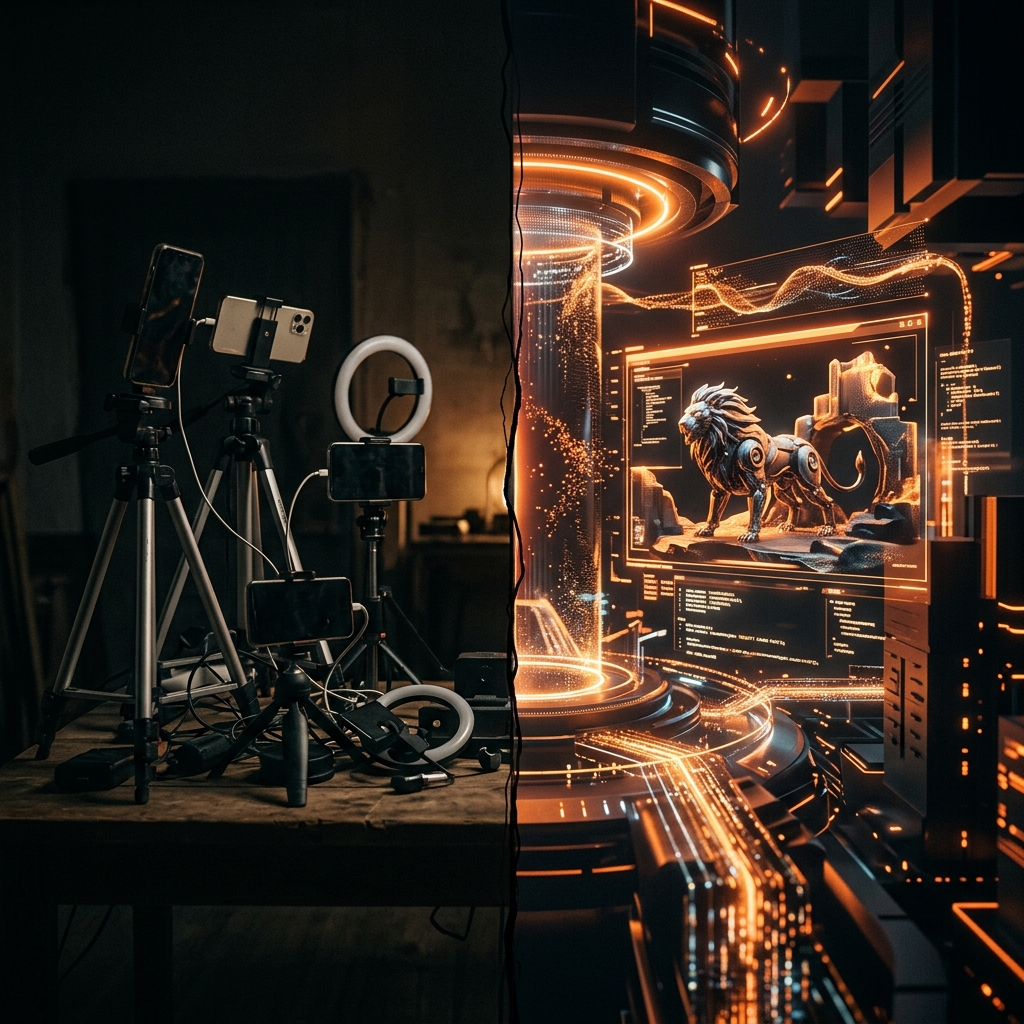
UGC is no longer authentic. It is a highly manufactured, expensive formula that consumers have learned to ignore.
The UGC Bubble Has Burst
If you run a direct-to-consumer (D2C) brand in 2026, you know the painful cycle: You spend $3,000 on a batch of User Generated Content (UGC). You wait three weeks for the creators to deliver. You launch the ads. They fatigue in four days. Your Cost Per Acquisition (CPA) spikes.
For the last five years, marketers relied on UGC to provide "authenticity." But as the formula became standardized—the hook, the problem, the product reveal, the call to action—consumers developed ad blindness.
When every single ad looks like a shaky iPhone video of someone sitting in their car, none of them stand out.
What You'll Learn
- Why the traditional UGC production model is mathematically broken for scaling brands.
- How generative AI video models (like Sora and Gen-3) are fundamentally replacing live shoots.
- The exact pipeline we use to generate 100+ ad variations per day at zero marginal cost.
The Math Behind Creative Testing
The secret to scaling ad accounts isn't one "winning ad." It is continuous, relentless iteration. To find an ad that works, you need to test 30 variations of the first three seconds (the hook).
With a traditional UGC agency, asking for 30 different hooks means hiring more creators, managing more logistics, and paying massive revision fees. The math simply doesn't scale.
This is where the AI Video Pipeline changes everything.
Instead of relying on human creators to film physical products, modern agencies like Prmpt.in build digital twins of your products. Using advanced multi-modal AI, we generate photorealistic video ads from scratch.
"We are no longer limited by the laws of physics, actor availability, or weather. If an ad isn't converting, we don't schedule a reshoot. We change the prompt and launch the new variation in 20 minutes."
How the AI Video Pipeline Works
- Product Ingestion: We train an AI model exclusively on your product's 3D geometry and brand guidelines.
- Hook Generation: Our autonomous agents analyze current TikTok and Meta ad trends to script 50 high-converting hooks.
- Generative Rendering: We use state-of-the-art video models to render these hooks in cinematic, ultra-high-definition environments that a human creator could never afford to rent.
- Iterative Feedback: Once the ads go live, performance data is fed directly back into the pipeline. If "Hook A" performs better than "Hook B," the system automatically generates 10 new variations of Hook A.
The Era of Cinematic Scale
Consumers are exhausted by fake authenticity. They want to be entertained. They want high-fidelity, cinematic experiences. AI video generation allows you to pair the psychological triggers of classic UGC with the production value of a Super Bowl commercial—at a fraction of the cost.
If you are still waiting weeks for creators to send you a Google Drive folder of shaky iPhone footage, your competitors are already outspending you with AI pipelines. It is time to upgrade your creative engine.